


METHYLENE BLUE: THE COMPLETE GUIDE
EVERYTHING YOU NEED TO KNOW:
FROM BASIC TO ADVANCED
Methylene Blue is a highly versatile organic substance with a long history of use in medicine, biology, and more. On this page, we'll give you a comprehensive and honest overview of what Methylene Blue is, how it's used, and why it's relevant to you.
We've included a list of quick links if you want to jump to a specific section :
What is methylene blue?
Purity Grades and Applications of Methylene Blue:
Methylene blue and Vitamin C?
Myths and realities of Methylene Blue
What's said on social media vs. reality
How to use Methylene Blue safely?
Conclusions, expectations and studies
Precautions and Interactions
EVERYTHING YOU NEED TO KNOW:
FROM BASIC TO ADVANCED

WHAT IS METHYLENE BLUE?
Methylene Blue is an organic molecule C₁₆H₁₈ClN₃S and its scientific name is methylthionyne chloride.
It has been used in fields ranging from biology to medicine. It is known for its powerful blue color, which has applications as an antiseptic and in the treatment of diseases. However, there are very important considerations for its various uses, the first being its purity.
In its anhydrous (non-hydrated) form it is a red powder with bronze-colored sparkles.
In its hydrated form (pharmaceutical grade) it is a green powder with coppery reflections and sparkles that, upon contact with water, acquires an intense blue color.

PURITY GRADES AND APPLICATIONS
NOT ALL METHYLENE BLUE IS THE SAME
There are different purity levels of Methylene Blue for different applications, and it is VERY IMPORTANT to know these levels because there are products for sale made with Methylene Blue of other purity levels advertised as being for human consumption. Always look for certification and purity level from the manufacturer and an external laboratory.

Industrial Grade AM with a purity of 90% to 95% or less:
Uses: Industrial applications such as water treatment, textile dyeing, and chemical processes. Purity: 90% - 95% or less.
QP Grade (Quality for laboratory testing) Purity: Generally above 95%, but not as high as API or USP grades.
Use: Manufacturing of cosmetics and use in laboratories for staining and microscopic research.
API Grade (Active Pharmaceutical Ingredient):
Use: Production of medicines and medical treatments. Purity: 98% - 99% or higher.
USP Grade (Pharmaceutical, United States Pharmacopeia Standard):
Use: Medical and pharmaceutical applications, including injectable solutions. Purity: 99% or higher, meeting United States Pharmacopeia standards.

Industrial Grade AM with a purity of 90% to 95% or less:
Uses: Industrial applications such as water treatment, textile dyeing, and chemical processes. Purity: 90% - 95% or less.
QP Grade (Quality for laboratory testing) Purity: Generally above 95%, but not as high as API or USP grades.
Use: Manufacturing of cosmetics and use in laboratories for staining and microscopic research.
API Grade (Active Pharmaceutical Ingredient):
Use: Production of medicines and medical treatments. Purity: 98% - 99% or higher.
USP Grade (Pharmaceutical, United States Pharmacopeia Standard):
Use: Medical and pharmaceutical applications, including injectable solutions. Purity: 99% or higher, meeting United States Pharmacopeia standards.

Industrial Grade AM with a purity of 90% to 95% or less:
Uses: Industrial applications such as water treatment, textile dyeing, and chemical processes. Purity: 90% - 95% or less.
QP Grade (Quality for laboratory testing) Purity: Generally above 95%, but not as high as API or USP grades.
Use: Manufacturing of cosmetics and use in laboratories for staining and microscopic research.
API Grade (Active Pharmaceutical Ingredient):
Use: Production of medicines and medical treatments. Purity: 98% - 99% or higher.
USP Grade (Pharmaceutical, United States Pharmacopeia Standard):
Use: Medical and pharmaceutical applications, including injectable solutions. Purity: 99% or higher, meeting United States Pharmacopeia standards.

Industrial Grade AM with a purity of 90% to 95% or less:
Uses: Industrial applications such as water treatment, textile dyeing, and chemical processes. Purity: 90% - 95% or less.
QP Grade (Quality for laboratory testing) Purity: Generally above 95%, but not as high as API or USP grades.
Use: Manufacturing of cosmetics and use in laboratories for staining and microscopic research.
API Grade (Active Pharmaceutical Ingredient):
Use: Production of medicines and medical treatments. Purity: 98% - 99% or higher.
USP Grade (Pharmaceutical, United States Pharmacopeia Standard):
Use: Medical and pharmaceutical applications, including injectable solutions. Purity: 99% or higher, meeting United States Pharmacopeia standards.
WHY IS IT IMPORTANT?
That remaining 5% or 2% may consist of:
Heavy metals and other toxins (lead, mercury, cadmium, arsenic, among others) are highly toxic and accumulate in the body even in very small amounts.
Residual solvents (ethanol, methanol, toluene, xylene, among others)
Inorganic salts (chlorides, sulfates, carbonates)
Oxidation byproducts
Residual acidity or bases (remnants of unneutralized acids or bases)
METHYLENE BLUE WITH VITAMIN C
COLOR CHANGE AND PROPERTIES
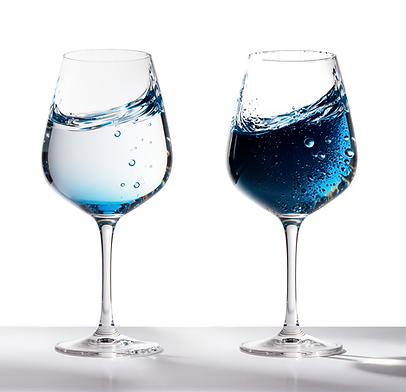
One fascinating aspect of Methylene Blue is its interaction with Vitamin C ( ascorbic acid ) . When both ingredients are mixed, Methylene Blue changes color, but retains its original properties.
Methylene Blue is a molecule that has a property known as oxidation-reduction. This means it can gain or lose electrons, which changes its color. When we mix Methylene Blue with Vitamin C, the vitamin acts as a reducing agent. This means that Vitamin C donates electrons to Methylene Blue, changing its oxidized state (blue) to a reduced state, which is colorless or transparent.
This process is called reduction and, visually, it is the reason why Methylene Blue, with enough Vitamin C, will lose its blue color and become transparent.
An ideal reduction range is one that maintains an optimal amount of unreduced methylene blue and another in the form of leucomethylene for greater durability within the body and to be used to the fullest extent.
MYTHS AND REALITIES OF METHYLENE BLUE:
It's common to hear various rumors about Methylene Blue, especially regarding its safety and effectiveness. Below, we debunk some of the most frequent myths and present information supported by scientific studies.
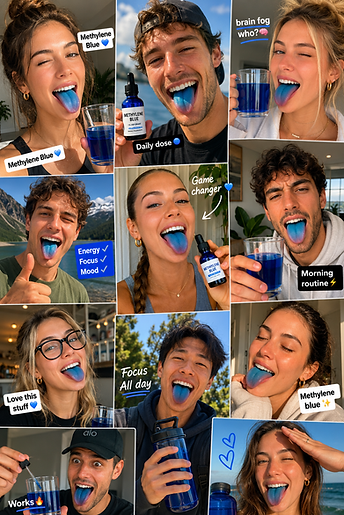
1: "If it doesn't stain your tongue, it's not Methylene Blue"
Fact : Videos circulating online show people taking up to 20 drops of 1% pure Methylene Blue in half a glass of water. This dose is quite high, and in its undiluted form, it will act like ink and stain your tongue and teeth. Methylene Blue, in its more easily absorbed form, is combined with Vitamin C in precise proportions. These formulations will not stain your tongue or teeth. Proper dosage is crucial, as it can significantly raise serotonin levels in the body.
2: "It is toxic even in small quantities"
Fact : The toxicity of methylene blue depends on the dose and purity. At low doses (below 1-2 mg/kg of body weight), it has been shown to have antioxidant and neuroprotective properties. However, excessive doses can cause adverse effects, such as oxidative stress or interference with monoamine oxidase (MAO). In addition, industrial grades may contain hazardous impurities, such as heavy metals and residual solvents.
3: "Methylene Blue cures all diseases"
Fact : Although studies have shown benefits in various areas (such as mitochondrial function, neuroprotection, and the treatment of certain infections and parasites), it is not a miracle cure. Its effectiveness depends on multiple factors, including dosage, purity, and the specific condition for which it is used.
4: "There is not enough scientific evidence to support its use"
Fact : Numerous scientific studies have been conducted on methylene blue, including trials in neuroscience, metabolism, and diseases such as Alzheimer's and Parkinson's. It has also been approved medically for the treatment of methemoglobinemia, and its potential in longevity and cellular bioenergetics is being investigated.
5: "Methylene Blue is only an industrial dye and should not be consumed."
Fact : While methylene blue has industrial applications, high-purity versions, such as USP and API grades, meet pharmaceutical standards and have been studied for human use. Its medical history dates back more than a century, with applications in mitochondrial health and neuroprotection.

It's common to hear various rumors about Methylene Blue, especially regarding its safety and effectiveness. Below, we debunk some of the most frequent myths and present information supported by scientific studies.
1: "If it doesn't stain your tongue, it's not Methylene Blue"
Fact : Videos circulating online show people taking up to 20 drops of 1% pure Methylene Blue in half a glass of water. This dose is quite high, and in its undiluted form, it will act like ink and stain your tongue and teeth. Methylene Blue, in its more easily absorbed form, is combined with Vitamin C in precise proportions. These formulations will not stain your tongue or teeth. Proper dosage is crucial, as it can significantly raise serotonin levels in the body.
2: "It is toxic even in small quantities"
Fact : The toxicity of methylene blue depends on the dose and purity. At low doses (below 1-2 mg/kg of body weight), it has been shown to have antioxidant and neuroprotective properties. However, excessive doses can cause adverse effects, such as oxidative stress or interference with monoamine oxidase (MAO). In addition, industrial grades may contain hazardous impurities, such as heavy metals and residual solvents.
3: "Methylene Blue cures all diseases"
Fact : Although studies have shown benefits in various areas (such as mitochondrial function, neuroprotection, and the treatment of certain infections and parasites), it is not a miracle cure. Its effectiveness depends on multiple factors, including dosage, purity, and the specific condition for which it is used.
4: "There is not enough scientific evidence to support its use"
Fact : Numerous scientific studies have been conducted on methylene blue, including trials in neuroscience, metabolism, and diseases such as Alzheimer's and Parkinson's. It has also been approved medically for the treatment of methemoglobinemia, and its potential in longevity and cellular bioenergetics is being investigated.
5: "Methylene Blue is only an industrial dye and should not be consumed."
Fact : While methylene blue has industrial applications, high-purity versions, such as USP and API grades, meet pharmaceutical standards and have been studied for human use. Its medical history dates back more than a century, with applications in mitochondrial health and neuroprotection.
CÓMO USAR EL AZUL DE METILENO DE FORMA SEGURA?
Methylene blue can offer benefits when used correctly, but its safety depends on key factors such as purity, dosage, and method of administration. Below, we explain best practices for its safe use.
1. Choose the appropriate grade
Not all types of methylene blue are suitable for human consumption. To ensure safety and effectiveness, use only:
USP (Pharmaceutical) or API (Active Pharmaceutical Ingredient) grade, which meet purity standards greater than 99.5%.
Completely avoid industrial or technical grades, as they may contain heavy metals and toxic solvents that even in small amounts can cause cumulative damage to the kidneys, liver, lungs, and other organs.
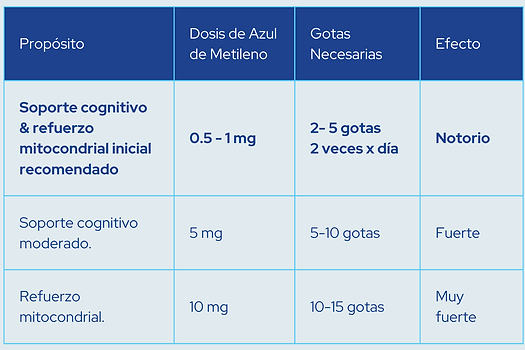
2. Determine the correct dose
The safe dose varies depending on the intended use. Studies have suggested:
Low doses (0.5-2 mg/kg of body weight) → Used in neuroprotection and mitochondrial support.
Higher therapeutic doses → Applied in medical treatments such as methemoglobinemia, under professional supervision.
Avoid excessive doses (>5 mg/kg), as they can cause adverse effects such as oxidative stress or interference with neurotransmitters.
3. Form of administration
Oral: Dissolved in water or juice. Ideally with Vitamin C to improve absorption. Do not combine with coffee.
Topical: In diluted formulations for application to the skin.
Intravenous: Only under medical supervision in clinical settings.
4. Important precautions
⚠ Avoid combining it with certain medications, such as MAO inhibitors or SSRIs (antidepressants), as it may increase the risk of serotonin syndrome.
⚠ Protect your skin and clothing, as it may temporarily stain skin and fabrics.
⚠ Use low doses at the beginning to assess tolerance and avoid side effects.
5. Proper storage
Store in an airtight container in a cool, dark place to prevent spoilage. Refrigeration is possible.
Protect from direct sunlight.
Methylene blue can offer benefits when used correctly, but its safety depends on key factors such as purity, dosage, and method of administration. Below, we explain best practices for its safe use.
1. Choose the appropriate grade
Not all types of methylene blue are suitable for human consumption. To ensure safety and effectiveness, use only:
USP (Pharmaceutical) or API (Active Pharmaceutical Ingredient) grade, which meet purity standards greater than 99.5%.
Completely avoid industrial or technical grades, as they may contain heavy metals and toxic solvents that even in small amounts can cause cumulative damage to the kidneys, liver, lungs, and other organs.
2. Determine the correct dose
The safe dose varies depending on the intended use. Studies have suggested:
Low doses (0.5-2 mg/kg of body weight) → Used in neuroprotection and mitochondrial support.
Higher therapeutic doses → Applied in medical treatments such as methemoglobinemia, under professional supervision.
Avoid excessive doses (>5 mg/kg), as they can cause adverse effects such as oxidative stress or interference with neurotransmitters.
CONCLUSIONS:
WHAT BENEFITS CAN YOU EXPECT FROM METHYLENE BLUE? IS IT RIGHT FOR YOU?
Lo que los usuarios del Azul de Metileno reportan es consistente con los estudios que se han llevado a cabo:
1. Mejora cognitiva
2. Mejora de estado de ánimo
3. Mayor productividad
4. Incremento de energía y vitalidad
Estas afirmaciones no son un uso médico ni terapéutico. Son puramente empíricas. A continuación te compartimos los estudios científicos que soportan estas experiencias:
CONCLUSIONS:
WHAT BENEFITS CAN YOU EXPECT FROM METHYLENE BLUE? IS IT RIGHT FOR YOU?
El azul de metileno como potenciador metabólico y hemodinámico cerebral
Methylene Blue as a Cerebral Metabolic and Hemodynamic Enhancer
https://journals.plos.org/plosone/article/file?type=printable&id=10.1371/journal.pone.0046585
Mecanismos neurometabólicos para la mejora de la memoria y la neuroprotección del azul de metileno}
Neurometabolic mechanisms for memory enhancement and neuroprotection of methylene blue
El azul de metileno modula la conectividad funcional en el cerebro humano
Methylene blue modulates functional connectivity in the human brain
https://pmc.ncbi.nlm.nih.gov/articles/PMC5018244/
Mecanismos neurometabólicos para la mejora de la memoria y la neuroprotección del azul de metileno
Neurometabolic mechanisms for memory enhancement and neuroprotection of methylene blue
https://www.sciencedirect.com/science/article/abs/pii/S0301008211001948
Imagen por RM funcional multimodal aleatorizada de los efectos del azul de metileno en el cerebro humano
Multimodal Randomized Functional MR Imaging of the Effects of Methylene Blue in the Human Brain
https://pubs.rsna.org/doi/abs/10.1148/radiol.2016152893?journalCode=radiology
¿Podría el azul de metileno beneficiar a pacientes con déficits cognitivos?
Could Methylene Blue Benefit Patients With Cognitive Deficits?
https://psychiatryonline.org/doi/10.1176/appi.pn.2016.pp8a5
El azul de metileno reduce los niveles de Aβ y revierte el déficit cognitivo temprano al aumentar la actividad del proteasoma
Methylene Blue Reduces Aβ Levels and Rescues Early Cognitive Deficit by Increasing Proteasome Activity
https://pmc.ncbi.nlm.nih.gov/articles/PMC2992595/
Eficacia clínica y perspectivas del azul de metileno: una revisión sistemática
Clinical effectiveness and prospects of methylene blue: A systematic review
https://www.pfmjournal.org/m/journal/view.php?number=132
PRECAUTIONS:
Methylene blue is a weak monoamine oxidase inhibitor (MAOI). However, it's important to consider the significant interactions MAOIs have with other foods and supplements. Below, we share the most important ones.
Always consult a healthcare professional before starting or stopping any supplement.
En dosis altas y uso prolongado: Resumen
Los Inhibidores de MonoAminoOxidasa (IMAO)tienen interacciones de riesgo con:
-
Alimentos ricos en tiramina (pueden causar crisis hipertensiva)
-
Fármacos serotoninérgicos (pueden causar síndrome serotoninérgico)
-
Simpaticomiméticos y estimulantes (pueden causar crisis hipertensiva)
-
Depresores del SNC (pueden causar sedación excesiva)
-
Opioides y analgésicos (riesgo de depresión respiratoria y síndrome serotoninérgico)
-
Medicamentos para el Parkinson y anestésicos (riesgo de crisis hipertensiva)
-
Hierbas, suplementos y drogas recreativas (efectos peligrosos diversos)
⚠ Siempre verifica las interacciones antes de iniciar o suspender un IMAO.
Interacciones con Alimentos (Ricos en Tiramina)
Los IMAO inhiben la descomposición de la tiramina, lo que puede provocar una crisis hipertensiva. Evitar:
Quesos curados (Cheddar, Parmesano, Gouda, etc.)
Carnes curadas, ahumadas o fermentadas (salami, pepperoni, embutidos añejados)
Productos de soya fermentada (salsa de soya, miso, tempeh, natto)
Bebidas alcohólicas (vino tinto, cerveza, especialmente cerveza de barril)
Alimentos fermentados y encurtidos (chucrut, kimchi)
Frutas demasiado maduras (plátanos, aguacates, higos)
Extractos de levadura (Marmite, Vegemite)
Pueden causar síndrome serotoninérgico o estimulación excesiva del Sistema Nervioso Central:
ISRS (fluoxetina, sertralina, paroxetina, citalopram)
IRSN (venlafaxina, duloxetina)
ATC (amitriptilina, imipramina)
Antidepresivos atípicos (bupropión, mirtazapina, trazodona)
Hierba de San Juan (antidepresivo natural)
⚠ Esperar al menos 2 semanas después de suspender un IMAO antes de iniciar estos fármacos (5 semanas para fluoxetina debido a su vida media prolongada).
Fármacos Simpaticomiméticos (Aumentan la Presión Arterial)
Pueden provocar una crisis hipertensiva:
Descongestionantes (pseudoefedrina, fenilefrina)
Estimulantes (anfetaminas, metanfetaminas, metilfenidato)
Medicamentos para bajar de peso (fentermina, efedrina)
Medicamentos para el asma (albuterol, epinefrina)
Pueden causar síndrome serotoninérgico, no combinar con:
Meperidina (Demerol) → Riesgo grave o fatal de síndrome serotoninérgico
Tramadol → Aumenta el riesgo de convulsiones y toxicidad serotoninérgica
Metadona, fentanilo → Riesgo de depresión del SNC y toxicidad serotoninérgica
Riesgo de episodios hipertensivos y síndrome serotoninérgico:
L-DOPA (levodopa)
Mucuna Pruriens (alto contenido de Levo-Dopamina)
Agonistas de la dopamina (bromocriptina, pramipexol, ropinirol)
Pueden provocar picos peligrosos de presión arterial o síndrome serotoninérgico:
Anestésicos locales con epinefrina
Anestésicos generales
⚠ Los IMAO deben suspenderse al menos 2 semanas antes de una cirugía.
3. Interacciones con Hierbas y Suplementos
Hierba de San Juan → Aumenta el riesgo de síndrome serotoninérgico
Ginseng → Puede elevar la presión arterial
Triptófano y 5-HTP → Pueden causar síndrome serotoninérgico
Cafeína → Puede potenciar los efectos estimulantes